
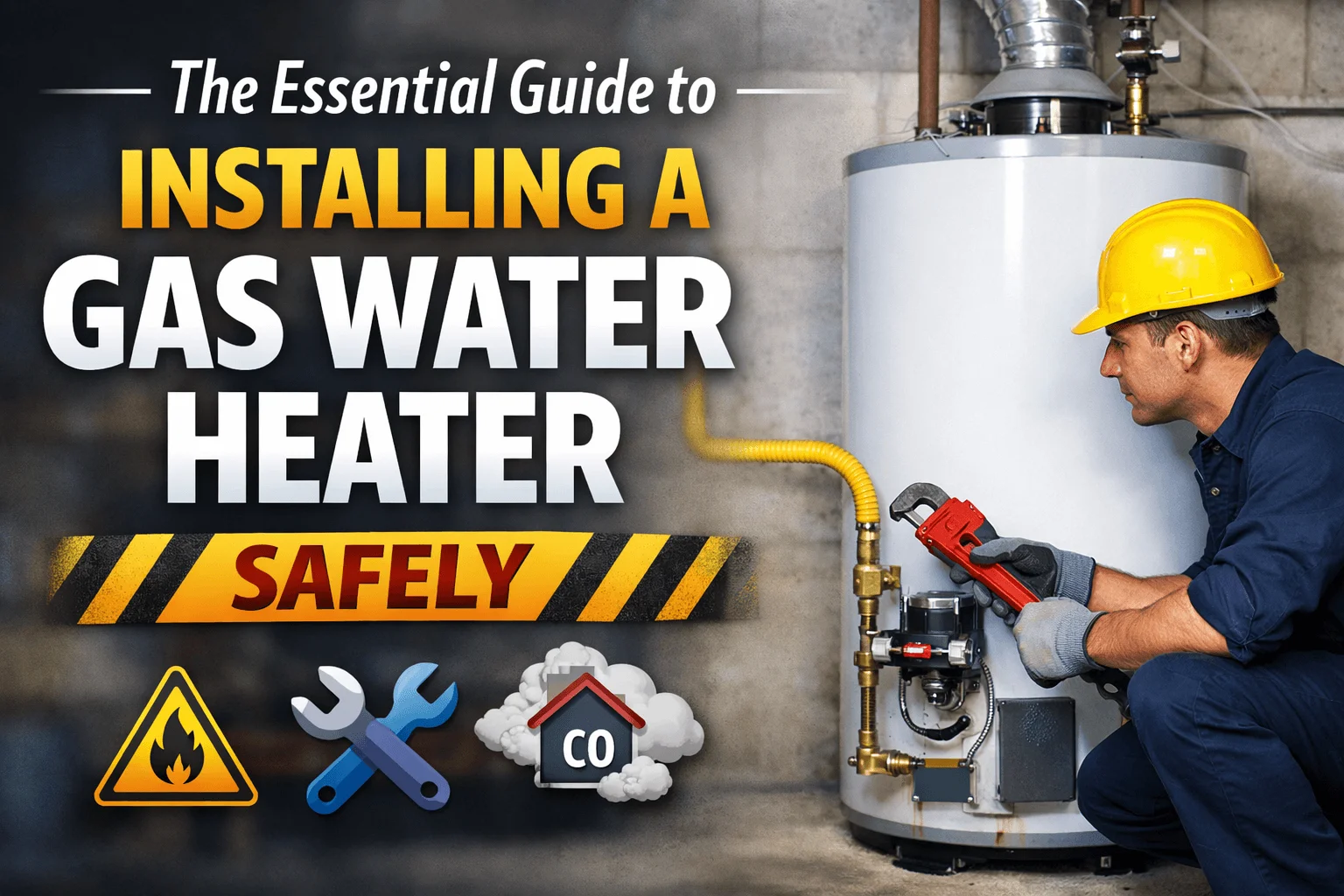
Taking a shower with cold water reminds us quickly how much we need a good water heater. But the risk associated with the gas-powered heaters is much more than just being uncomfortable. The risk gets higher if a gas heater is installed the wrong way. It becomes the cause of fires, gas leaks, or even silent carbon monoxide poisoning.It is because working with gas holds much risk. Always contact a professional if you want to have better quality service. In this complete guide, the installation of a gas heater with safety is provided. It covers all the safety rules you need to follow step by step to do the job in the right way.
Pre-Installation Preparation (The “Must-Dos”)
Choosing the Right Unit
Selecting the correct capacity is the first step toward lasting comfort. For a typical household, a 40 to 50-gallon tank is standard, but larger families may require 75 gallons to avoid cold showers. Always evaluate your peak water usage and space constraints to ensure your new unit meets daily demands efficiently.
Permits and Codes
Before turning a single wrench, verify your local building codes. Many jurisdictions require specific permits for gas appliance installations to ensure safety and insurance compliance. Overlooking this step is a common DIY mistake that can lead to fines or safety hazards, so always check with your local building department first.
The Essential Tool Kit
Having the proper tools on hand is essential for success. Heavy-duty pipe wrenches, a tubing cutter and a specific gas leak detector solution should all be part of your equipment. When working with copper supply lines, don’t forget to bring a soldering kit and Teflon tape rated for gas lines, which is usually yellow.
Safety Gear
Prioritising your physical protection is non-negotiable when handling heavy units and volatile gas lines. Always wear high-quality work gloves to prevent cuts and safety glasses to shield your eyes from debris. Most importantly, keep a rated fire extinguisher within arm’s reach at all times throughout the entire installation process.
Removing the Old Unit
Shutting Down
Turn the gas dial to the Off position. After this, close the manual gas valve on the pipe. Then turn off the cold water pipe that is going into the heater. Before you do anything else, make sure the small pilot light flame is completely out.
Draining
At the bottom of the tank, attach a sturdy garden hose to the small drain valve. Then run the other end of the hose to a floor drain or outside. To let the air into the pipes, turn on a hot water faucet somewhere in your house. Then, to let the water empty out, carefully open the drain valve all the way
Disconnection
Use a pipe wrench to carefully unscrew the gas line and the water pipes when the tank is empty.Before you try to move the old heater, you have to make sure that all the pipes are completely disconnected. This will help to prevent the breakage of your home plumbing
Installing the New Gas Water Heater
Placement and Levelling
Position your new unit on a solid, level surface to prevent shifting or internal stress on the tank.
There should be enough space around the heater as much as it is being mentioned in the instructions given by the manufacturer. This is important for both the proper flow of the air and to fix it easily later if needed. To keep the inside parts and the vent pipes working exactly as they should, place the heater on a flat level surface.
Ventilation Check
Make sure the gas fumes can get out of your house because it is very important for safety. These can create a deadly gas called carbon monoxide if they get trapped inside. Attach the vent hood to the top of the heater, then make its connection tightly to the vent pipe or chimney. Make sure every connection is sealed tight. For the natural rise of hot gas so that it can go outside instead of staying in your home, always put pipes upward
Connecting Water Lines
Make the connection of the cold water pipe to the inlet and the hot water pipe to the outlet. Check that these are properly connected. Use dielectric unions for better function.
These specialised fittings create a barrier between different metals, effectively preventing the electrochemical corrosion that often leads to premature leaks and significantly shortening the lifespan of your plumbing system.
The Gas Connection
You should put special gas-approved pipe paste or yellow Teflon tape on the threads of the connections. After that, with close attention, screw the gas line onto the heater’s valve. Check and make sure it is tight, but be careful not to over-tighten it. You must check for leaks after connecting everything. For this, use a mix of soap and water on the connections to make sure no gas is escaping. This step is important for the safety of your home.
Bringing It Online
Filling the Tank
You should have to make sure the tank is completely full of water. To push all the trapped air out of the pipes, turn on a hot water faucet somewhere in your house. Let it turn on until the water comes out in a steady stream.
Lighting the Pilot
To light the pilot, you should follow the instructions of the manufacturer printed on the unit with close attention. Make sure that the control knob is held down as required to allow the thermocouple to heat up and engage.
Testing
After you turn the heater on, observe it with attention. To make sure no water is leaking, check all the pipe connections. Check once the water reaches the right temperature, the main burner is turning on easily and turning off automatically.
Maintenance and Long-Term Safety
Periodic Checks
Schedule a full tank flush every six to twelve months to remove sediment. Regularly inspect all gas lines and water connections for signs of corrosion or leaks to ensure long-term safety.
Temperature Settings
Set your water heater to 120°F or 49°C. This optimal setting effectively prevents accidental scalding, inhibits bacterial growth, and significantly reduces energy costs for a more efficient household.
Conclusion
To keep your home a comfortable place for you, the correct installation of a new water heater is very important. You can ensure safety by following the simple and easy steps, like making sure the unit is level, checking the air vents, and testing carefully for leaks. You need to flush out the tank and check for any rust so that your water heater can function well for a long time. The installation of a gas heater yourself is a great feeling, but safety always stands at the top of the list. So if you are not well aware of the gas lines or the vent pipes, do not put your life and property at risk. Better to call a professional for this to get it done with safety, and you can have the peace of mind along with a comfortable home.
Ready for a Safer, More Efficient Hot Water System?
Never put the safety of your home at risk. Our professional team is available whether you need a professional to check your system or help with a brand-new installation. Get in touch today to schedule your visit. You can enjoy the comfort when experts are taking care of your plumbing.