
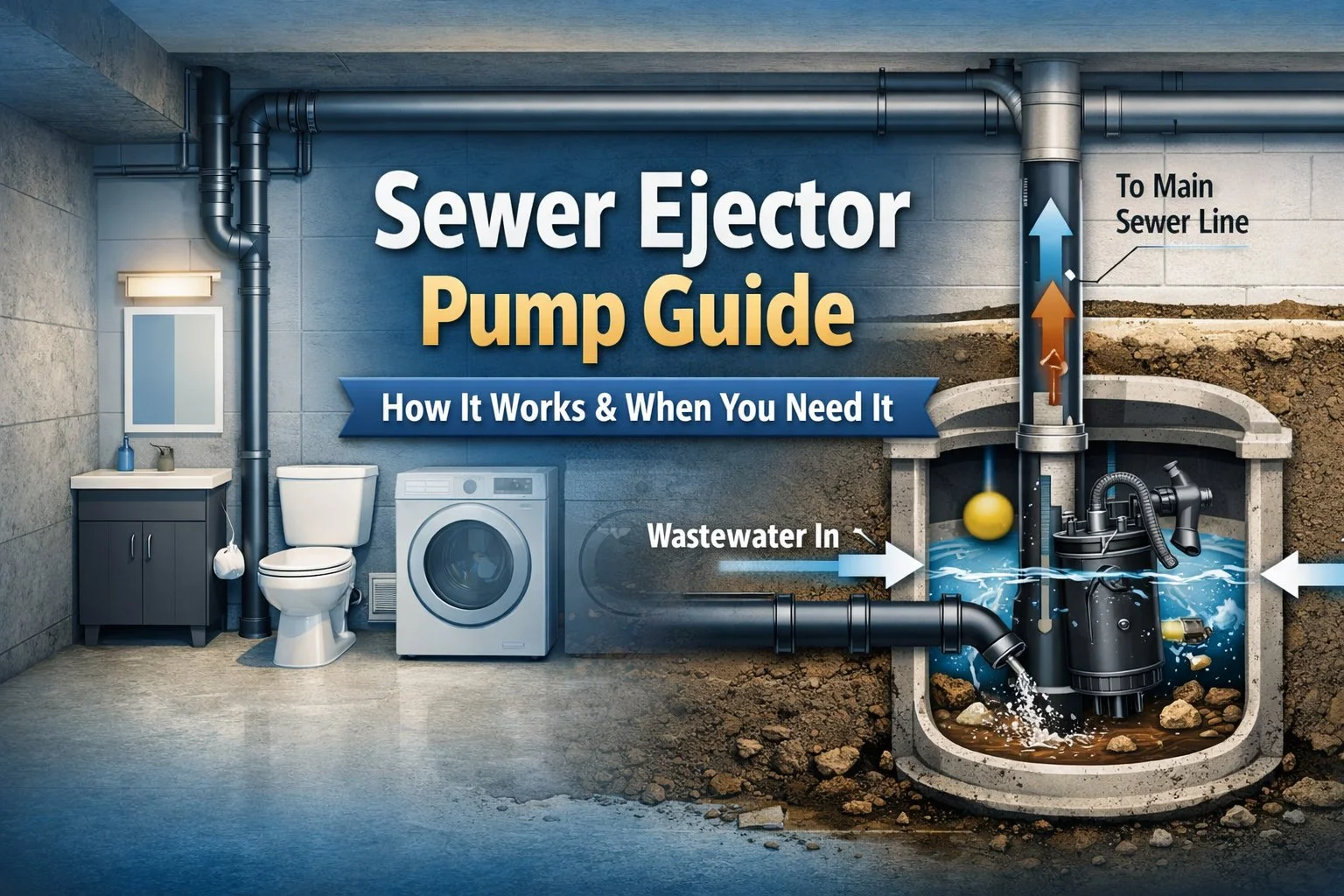
A sewer ejector pump is a vital tool for homes with bathrooms or laundry rooms located in basements. Because these fixtures sit below the main sewer line, gravity alone cannot move waste away from the house. The system works by collecting wastewater in a sumped basin; once it reaches a specific limit, the pump triggers to lift and push the waste upward into the primary septic or sewer pipes.
The pipes will be lower than the main sewer line in the street if you are building a bathroom in your basement. For this, you would need to have a more efficient pump to push the waste up and out. So that your drains can function properly, and messy backups can be done with more accuracy.
How a Sewer Ejector Pump Works
It is the method of moving waste from low points to the main sewer line. When plumbing sits below the main sewer line, gravity cannot pull waste away. This system collects wastewater in a sealed basin. Once full, the pump activates to push the liquid and solids upward, ensuring everything reaches the municipal pipes or septic tank efficiently.
The “Grinder” vs. The “Ejector”: A quick look at the two main types.
Standard ejector pumps handle soft waste and water by lifting it to the sewer line. In contrast, grinder pumps use rotating blades to shred tougher solids into a fine slurry. This makes grinders better for high-pressure systems or applications where waste travels a long distance.
The Automatic Cycle
The float switch acts as the brain of the unit. As wastewater fills the basin, the float rises like a buoy. When it reaches a set height, it triggers the motor to start pumping. Once the level drops, the switch signals the pump to stop.
Signs You Definitely Need an Ejector Pump
Below-Grade Plumbing
It is because the Basement bathrooms and laundry rooms are lower than the sewer pipes in the street, waste cannot flow down and away on its own. To push the dirty water and waste up into the main pipes, you need a pump. So that the basement drains of your home keep functioning properly and stay clean.
Distance from the Main Line
If your home sits far back from the street or the main sewer connection, a long horizontal run can cause flow issues. An ejector pump provides the necessary pressure to push waste through these extended pipes, preventing clogs and backups.
Slow Drainage in the Basement
Persistent slow drainage or standing water in the basement, sinks, and showers often indicates that the natural slope is insufficient. When gravity fails to move the volume of water produced, an ejector pump becomes the reliable solution to clear the lines.
Portland-Specific Considerations
Older Homes and Deep Sewers: How Portland’s historic neighborhoods impact plumbing.
Many historic homes in Portland feature deep basements that sit far below the original municipal sewer lines. In these older neighborhoods, gravity-fed drainage is often impossible for new basement build-outs, making a high-quality pump essential for modernizing your home’s plumbing.
Hilly Terrain: Dealing with elevation changes on your property.
Portland’s unique topography often places homes on steep inclines or below the street level. When your property’s plumbing fixtures are lower than the main sewer connection, elevation changes prevent natural flow. A pump provides the necessary force to move waste.
Local Building Codes: Why professional installation is a requirement in the city.
City regulations in Portland are strict regarding wastewater management and backflow prevention. Professional installation ensures your system meets local plumbing codes, preventing environmental hazards and ensuring your basement renovation passes inspection. This specialized work requires precise venting and basin sealing.
Key Components of a Reliable System
The Basin (Holding Tank): Why size and seal matter.
The basin acts as the collection point for all wastewater before it is pumped out. A proper seal is essential to prevent sewer gases and moisture from escaping into your home. Its size must also be large enough to prevent the pump from cycling too frequently.
The Discharge Pipe: Ensuring the right diameter for waste flow.
The discharge pipe carries waste from the pump to the main sewer line. Using the correct diameter is vital; if the pipe is too narrow, it can lead to frequent clogs or pump strain. Most systems require a 2-inch diameter to move solids reliably.
The Vent Pipe: Keeping the system safe and smell-free.
A vent pipe equalizes pressure within the basin, allowing air to escape as water enters. This prevents a vacuum from forming, which could slow drainage or trap sewer odors inside. Proper venting ensures the system operates quietly and keeps your basement smelling clean and fresh.
Conclusion
To maintain a properly functioning and hygienic home, the role of a sewer ejector pump can never be ignored.It becomes more important when you are dealing with below-grade plumbing. These systems provide the mechanical power needed to move waste where gravity cannot. For every situation, whether you are navigating the hilly terrain of Portland or simply modernizing an older basement. Do ignore that, from choosing the right basin to ensuring professional installation that meets local codes, each component works together with accuracy to prevent backups and bad, disturbing smells. Whenever you are planning to have a renovation, you will have a question Do I need a sewer ejector pump for my new bathroom? You will enjoy a long-term peace of mind and comfort of your home with the investment in high quality system. You would not encounter the problems of your home drainage system.