
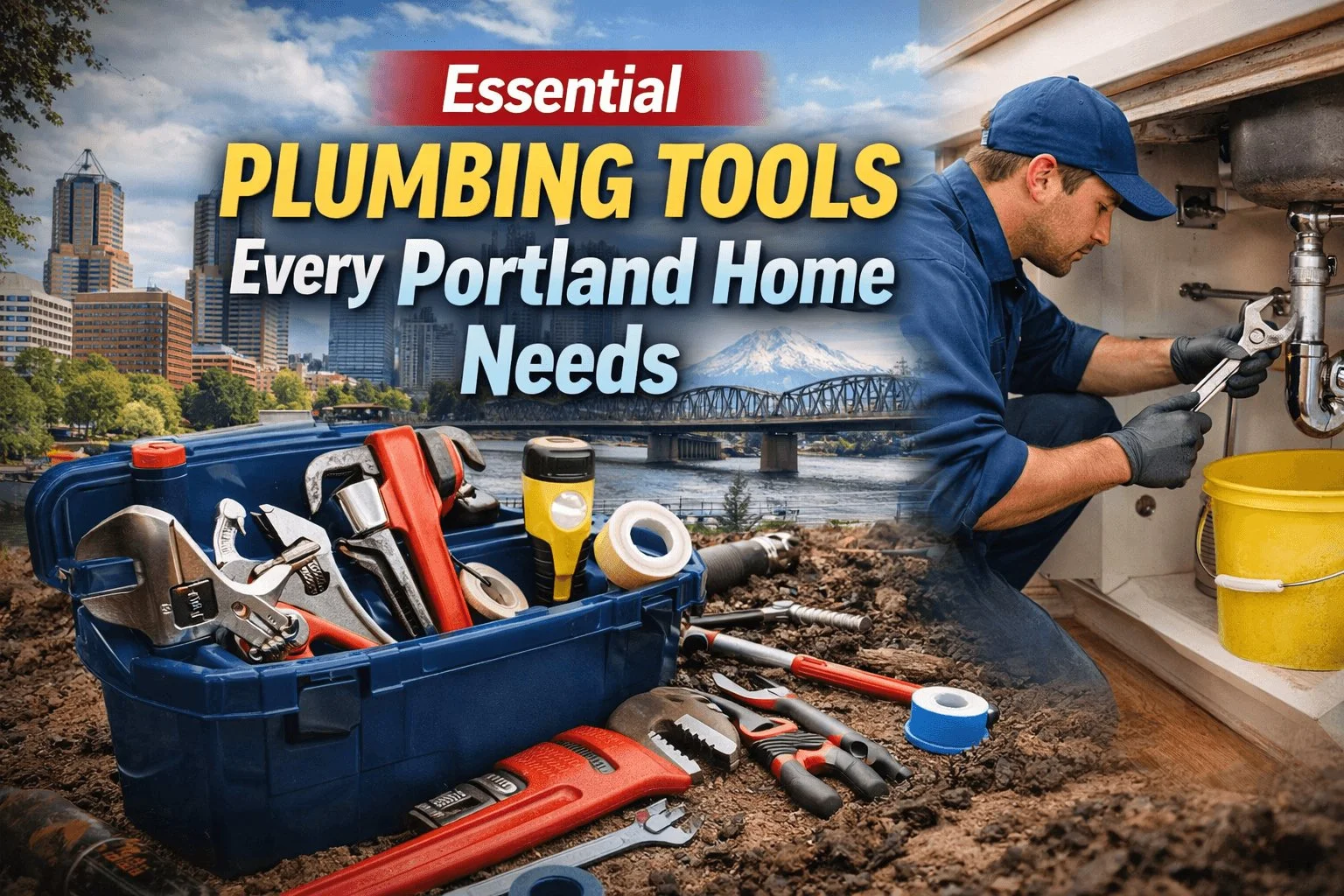
Suppose you woke up to a leak in the middle of the night, and it all happened suddenly. You were not prepared for it. So having a basic tool kit at home will give a supportive edge for the defence against the scary flood situation. You can at least do a quick, small fix. Although massive problems need to be handled by professionals, you can handle many small sudden breakups yourself with the right gear. You should be well aware of when you have to call the expert at your home and when you can handle the small problems yourself. This is an essential factor to live a normal, planned routine. So to get to know what plumbing tools you should keep at your Portland home, you are taking the first step toward saving time, money and mental stress.
The “Must-Have” Basics: For Clogs and Clears
1. The Cup Plunger vs. The Flange Plunger
All the plungers are not the same, so they function differently. As the flat cup plunger works efficiently l on the flat surfaces of sinks and tubs, there is a rubber flange on the flange plunger that fits tightly into toilet drains to create stronger and more powerful suction.
2. The Hand Auger (Drain Snake)
When a plunger fails to move a stubborn clog in your sink or shower, a hand auger is your next step. This flexible steel cable manually threads through pipes to break apart or retrieve hair and grease deep within the drain.
3. The Toilet Auger
A special tool named a toilet auger is used to fit into the curved pipes of the toilet. As this has a long, flexible rod with a protective sleeve, it is used to help you fix clogs without scratching the bowl or damaging the toilet.
Essential Wrenches and Grips
Adjustable Pipe Wrench
The adjustable pipe wrench is the heavy-duty icon of plumbing. Its serrated teeth grip rounded metal pipes with immense pressure, allowing you to loosen stubborn, corroded fittings or tighten heavy-duty connections that require significant leverage and a slip-free hold.
Tongue-and-Groove Pliers (Channel Locks)
Often called channel locks, these versatile pliers are a toolbox staple. Their adjustable sliding jaw allows you to grip various nut sizes and plastic fittings. They are perfect for tightening slip-nut joints under sinks or holding a pipe steady.
Basin Wrench
A basin wrench is a specialized, long-handled tool designed for the cramped, dark space behind a sink. Its pivoting “crow’s foot” head allows you to reach up and turn the mounting nuts that hold a faucet in place securely.
The Sealing and Repair Squad
Thread Seal Tape (Teflon Tape)
The thin white tape that is commonly called Teflon tape is used to stop leaks on threaded pipes. You can fill tiny gaps between the metal parts by wrapping them around the threads of a showerhead or faucet. This will create a tight seal and stop disturbing drips.
Plumber’s Putty
A soft material that feels like clay is known as Plumber’s putty. This will create a waterproof seal under kitchen strainers and faucets. Due to its ability to stay flexible, it makes sure that water stays inside the sink instead of leaking through the holes and into your cabinets.
Heavy-Duty Duct Tape and Patch Kits
While not a permanent fix, heavy-duty duct tape and specialized pipe patch kits are vital for emergency mitigation. They can temporarily wrap a hairline crack or a pinhole leak, holding back the pressure just long enough for you to call a professional.
Specialized Repairs and Cleanup
A Reliable Tape Measure
A reliable tape measure is indispensable for accuracy in any plumbing project. Whether you are replacing a section of PVC pipe or ensuring a new vanity fits perfectly in your bathroom, precise measurements prevent wasted materials and multiple hardware store runs.
The Dedicated Plumbing Bucket
Never underestimate the power of a dedicated plumbing bucket. Positioned under a P-trap or leaky pipe, it catches gray water and debris, protecting your flooring and cabinetry from water damage while you work on open lines or clogged drains.
LED Headlamp
Plumbing usually happens in dark, cramped cabinets or crawlspaces where hands-free lighting is vital. An LED headlamp illuminates your workspace perfectly, allowing you to focus both hands on your tools and fittings without struggling to hold a separate flashlight.
Conclusion
The first step to keep yourself ready for an emergency situation is to have a proper toolkit. Inspecting your gear at least twice a year is a mature action and and profirtable habit to keep your tools from rusting and to make sure that your plungers remain flexible.
This simple and easy routine will keep you ready for any emergency, from small drips to big floods. Keeping the above-mentioned important tools will protect your home from massive damage and save your wallet from the high cost of emergency repairs. So knowing which tool you need and how to use it will make you feel confident for small problems.
Don’t Wait for a Leak. Build Your Emergency Kit Today!
Being prepared is the best way to prevent water damage and costly repairs. Start gathering these essential tools now so you can handle any midnight plumbing crisis with confidence, protecting your home’s value and your hard-earned peace of mind.