
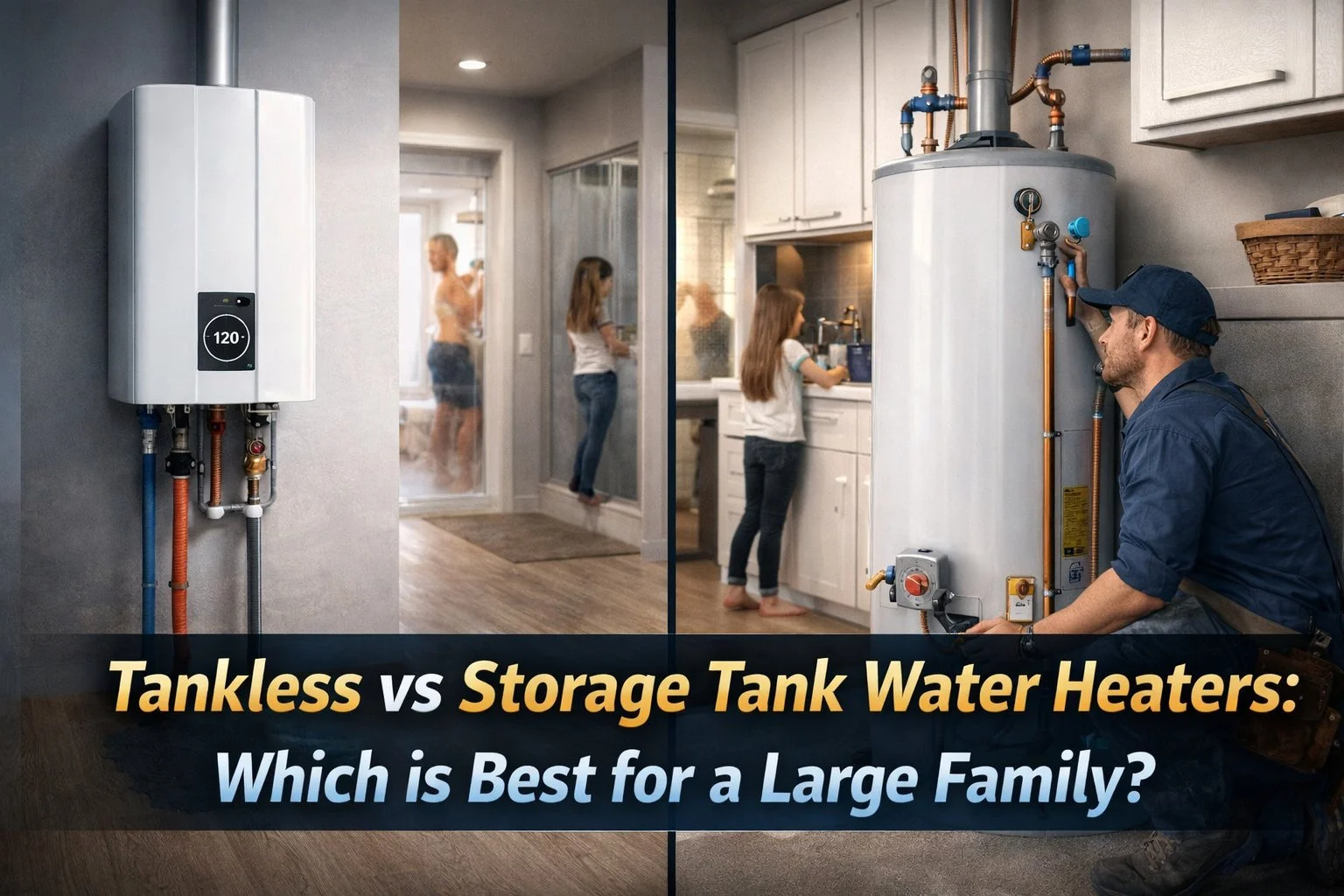
Morning sounds like a race to the bathroom for a big family. You would have to end up with a freezing cold shower if you are last in line. To get off the morning struggle, many families argue over tankless vs storage tank water heaters. Although there is a big tank of hot water with traditional heaters, that water still can run out. The new advanced tankless heaters heat the water only when you turn on the tap for your purpose, so they never let it run dry. Both water heaters have positive points, but the best selection depends on the factor of how many people use water at the same time and how much you would prefer to spend on repairs.
Understanding the Basics
Storage Tank Heaters: How they keep a reservoir of pre-heated water ready 24/7.
These units function like a large thermos, maintaining a constant supply of hot water in an insulated tank. A heating element or gas burner regularly cycles on to ensure the water stays at a set temperature, ready for immediate use.
Tankless (On-Demand) Heaters: They use high-powered burners to heat water instantly as it flows through the unit.
Instead of storing water, these systems activate only when a tap is turned on. Cold water travels through a heat exchanger, where high-intensity burners rapidly heat it to the desired temperature, providing a continuous flow without needing a bulky tank.
Tankless Water Heaters
| Pros | Cons |
| Never Runs Out: You get endless hot water, so the last person to shower still gets a warm wash. | Expensive to Buy: The unit costs more money upfront, and professional installation can be pricey for many family budgets. |
| Saves Floor Space: These small units hang on the wall, leaving more room in your garage or laundry area. | Flow Limits: If two people shower at the same time, the water might not stay as hot as you want. |
| Lasts Very Long: Most units work well for twenty years, which is much longer than a standard water tank. | Hard to Install: Your home might need new gas pipes or extra electrical work to make the new system function. |
| Lower Energy Bills: It only heats water when you turn on the tap, so you are not wasting any electricity. | Needs Yearly Cleaning: You must flush the system with vinegar once a year to keep it running smoothly and clear. |
| No Flooding Risk: Since there is no giant tank to rust or break, you don’t have to worry about leaks. | Cold Water Gaps: You might feel a quick blast of cold water if you turn the faucet on and off fast. |
Storage Tank Heaters
| Pros | Cons |
| Cheaper Upfront: These are the most affordable options to buy and install quickly when your old heater finally breaks down. | Can Run Out: Once the tank is empty, your family has to wait a long time for it to reheat. |
| Multiple Showers: The tank can send hot water to two or three bathrooms at the exact same time without struggle. | Wasted Energy: It stays on all day to keep the water hot, even when no one is using it. |
| Easy to Fix: Almost any plumber can fix these quickly because the parts are simple and very easy to find. | Takes Up Space: The big, heavy tank needs a lot of room on the floor of your utility closet. |
| Works During Outages: Gas tanks still give you hot water even if the power goes out during a bad storm. | Short Life: These tanks usually only last about ten years before they start to have problems and need replacing. |
| Instant Hot Water: You have a big tank of hot water ready to go for quick tasks like washing hands. | Leak Hazard: Old tanks can rust and leak fifty gallons of water onto your floor, causing a very big mess. |
Cost Analysis for Large Households
The initial cost of the installation of the tankless water heater system is more than that of a regular tank. Although the unit is expensive itself, for safe working of the system, you have to pay for new pipes and vents. These expenses make it challenging for a family with an average budget to pay for everything at the start.
Monthly Savings: Large families use more water, making the high efficiency of tankless models more impactful on the gas/electric bill.
Because tankless units only heat water when needed, they eliminate the energy wasted by keeping a massive tank hot all day. These units can reduce the monthly bills for big families who use a lot of hot water. It is because these do not waste energy keeping the tank hot all day, so these savings pay for the higher price.
Maintenance Requirements: Flushing requirements for tankless vs. anode rod replacement for tanks.
You must clean the tankless system with vinegar once a year to stop minerals from building up inside, so that it can keep working with accuracy and perfection. For regular tanks, you have to check every few years to stop the tank from rusting because they have a small metal rod. Although both systems need care for proper working, the tankless unit demands more attention.
Which is Best for a Large Family?
Choose Tankless if: Your family takes showers at different times, and you do not have a large area
An on-demand system is ideal if your household spreads out its hot water usage. Its compact, wall-mounted design saves valuable floor space, making it perfect for smaller utility rooms. Since these units last twice as long as traditional tanks, the long-term energy savings and durability provide a significant return on investment.
Choose Storage Tank if: All the family members of your home need to take a shower at the same time
If your family creates a massive spike in demand every morning, a large storage tank offers better flow rates for multiple fixtures. They are far less expensive to install and provide a reliable reservoir of hot water. This remains the most cost-effective choice for families needing high volume on a budget.
The “Hybrid” or Dual-Unit Solution: A brief mention of installing two tankless units for massive homes.
For sprawling residences with high simultaneous demand, a single unit may struggle to keep up. Installing two tankless units in a “manifold” setup allows them to work together during peak hours. This hybrid approach provides an endless supply of hot water while maintaining the flow needed for multiple large bathrooms.
Conclusion
Having long-term benefits of better performance of the water heater is an important factor to keep in consideration while choosing the right water heater for a large family. If your family members take many showers in a day and you can not afford the high cost to pay at the initial installation of an advanced water heating system, then a tankless system is suitable for you in your available budget. If your family takes two showers and a sink at the same time, then a big water tank is a suitable and wise choice. It will keep the water pressure perfect and available for everyone at the same time.
So the best and most suitable choice of water heater system depends on your daily routine and your preference to save space. Take the professional suggestion to pick the perfect water heater system for your family.
Ready to Upgrade Your Home’s Hot Water System?
Our experts are ready to help you make a wise decision for the installation of a suitable water heater system for your family. Get in touch with us for the professional guide and support. To enjoy reliable hot water in every room of your home.