
Professional Drain Cleaning in Portland, OR
A slow drain is annoying. A backed-up main line is an emergency. We handles both. We clear kitchen sinks, tubs, showers, floor drains, laundry lines, and main sewer lines across Portland — from 1920s bungalows in Laurelhurst to newer builds and multi-unit buildings downtown.
What is Professional Drain Cleaning?
Professional drain cleaning is the removal of buildup, blockages, and debris from a drain line using commercial equipment — then verifying the line is actually clear.
It is different from pouring a bottle of chemical cleaner down a sink. A store-bought product might eat through a small hair clog near the trap. It does nothing for grease coating 40 feet of pipe wall, or roots that have grown through a cracked clay joint.
A licensed plumber does three things a homeowner can’t:
Signs Your Drain Needs Professional Cleaning
Most drain emergencies give you warning first. Here’s what to watch for:
Any of these are worth a call before they turn into overflow and water damage.
What Causes Drains to Clog?
Different fixtures clog for different reasons. Knowing which is which saves time.
Portland adds two more culprits. Mineral scale builds inside older galvanized and cast iron pipes, roughening the interior so debris catches easily. And roots — Douglas firs, maples, and street trees chase the moisture and nutrients leaking from old clay and cast iron sewer joints. Roots are the number one cause of main line failure in Portland’s older neighborhoods.
Other Plumbing Services
Drain Cleaning Services We Offer
Kitchen Drain Cleaning
Grease and food waste are the usual suspects. We cable the branch line and, when buildup is heavy, hydro jet the pipe wall back to full diameter. Cabling punches a hole through grease; jetting removes it.
Bathroom Drain Cleaning
Lavatory sinks clog close to the trap. We pull and clean the P-trap, clear the branch, and check the pop-up assembly — a common hidden catch point.
Shower Drain Cleaning
Hair and soap scum bind into a mat above the trap. We remove the strainer, clear the trap arm, and flush the line.
Bathtub Drain Cleaning
Tub drains involve an overflow tube and linkage that collects debris. We access through the overflow plate for a proper clear instead of forcing a cable through the stopper.
Floor Drain Cleaning
Basement and garage floor drains handle water heater discharge, washer overflow, and seepage. They clog with silt, sediment, and rust flakes from cast iron. We clear them and refill the trap to stop odors.
Laundry Drain Cleaning
Standpipes overflow when lint packs the line. We cable the standpipe and trap arm, then check for proper venting.
Utility Sink Drain Cleaning
Paint, plaster, drywall mud, and grit settle in utility sink traps. These often need mechanical removal, not chemicals.
Main Sewer Drain Cleaning
The main lateral runs from your house to the city sewer. When it blocks, everything backs up. We clear through the exterior cleanout or the interior cleanout, then camera the line to identify roots, cracks, or bellies.
Commercial Drain Cleaning
Restaurants, salons, cafés, apartment buildings, and offices have heavier drain demands. We service grease-heavy kitchen lines, mop sink drains, floor sinks, and shared building stacks — with scheduling that works around your business hours.
Drain Cleaning Methods We Use
A drain snake, or cable machine, feeds a flexible steel cable through the pipe. A cutting head on the end breaks through the clog or hooks it for removal. Snaking is fast, effective for hair and soft blockages, and safe for fragile older pipes. It’s usually the right first move on a single slow fixture.
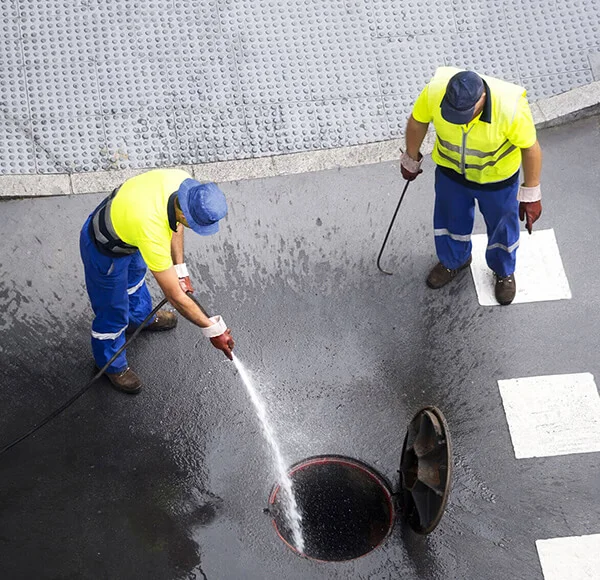
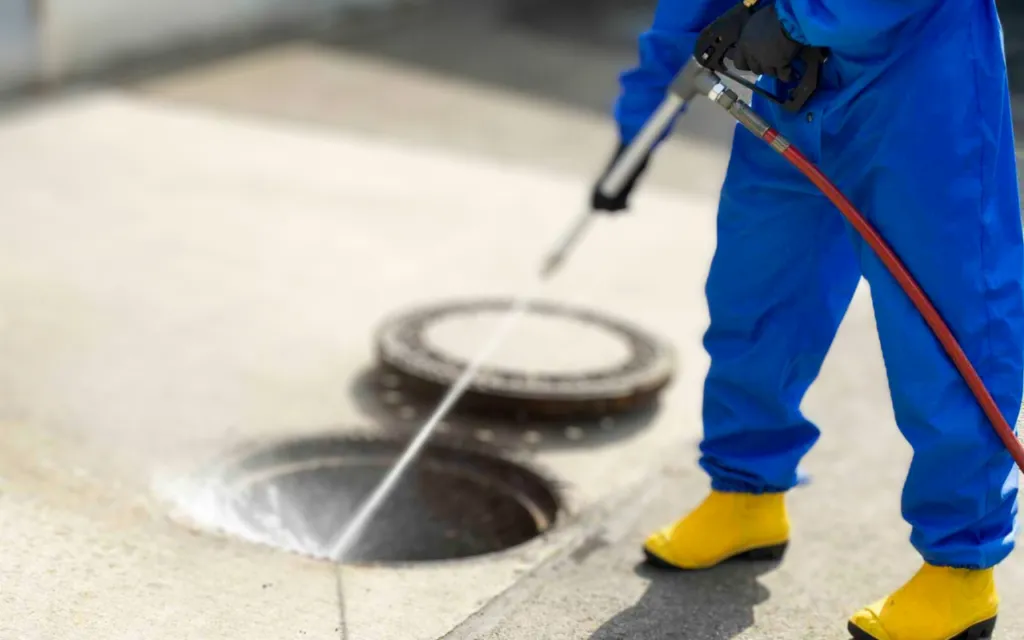
Hydro jetting uses high-pressure water — often 1,500 to 4,000 PSI — through a specialized nozzle that scours the full interior of the pipe. It removes grease, sludge, scale, and fine root hairs, restoring the line to its original diameter. Jetting is the best choice for grease-loaded kitchen and restaurant lines and for main sewers with heavy buildup. We camera first to make sure the pipe can handle the pressure.
A video camera inspection sends a waterproof camera down the line on a flexible rod. It shows exactly what’s happening: root intrusion, cracks, offset joints, bellied sections, collapsed clay, or leftover debris. The camera head can be located from above ground, so if a repair is needed we know precisely where to dig — no guesswork trenching across your yard.
Beyond handheld augers, we run sectional and drum machines with cable sizes matched to pipe diameter, plus root-cutting and grease-cutting heads. Using the wrong cable size in the wrong pipe is how drains get damaged. Matching the equipment to the line is a big part of doing this correctly.
How We Choose the Right Drain Cleaning Solution
The method depends on four things:
Pipe material
Old cast iron and clay are brittle. Aggressive jetting on a fractured line can make things worse. ABS and PVC handle more.
Type of blockage
Hair and paper respond well to cabling. Grease, scale, and sludge need jetting to actually be removed instead of bored through.
Location
Fixture-level clogs are simple. Main line clogs require cleanout access and often camera verification.
History
If a drain has clogged three times in a year, cabling it a fourth time is not a solution. That line needs a camera and a real plan.
Common Drain Problems We Fix
Our Professional Drain Cleaning Process
Step 1: Listen and inspect
We ask which fixtures are affected and when it started. Two clogged fixtures on opposite ends of the house point straight to the main line.
Step 2: Locate the cleanout
Access matters. We use the proper cleanout instead of pulling a toilet when we don’t have to.
Step 3: Test the drain
We run water to see how the line behaves under load — a drain that handles a trickle may still fail under a full tub release.
Step 4: Flush and retest
We run water through the system to confirm full flow.
Step 5: Explain what we found
You get a plain-English rundown and, if there’s an underlying issue, honest options — not pressure.
Step 6: Clean up
Drop cloths down, work area left the way we found it.
Emergency Drain Cleaning Portland, OR
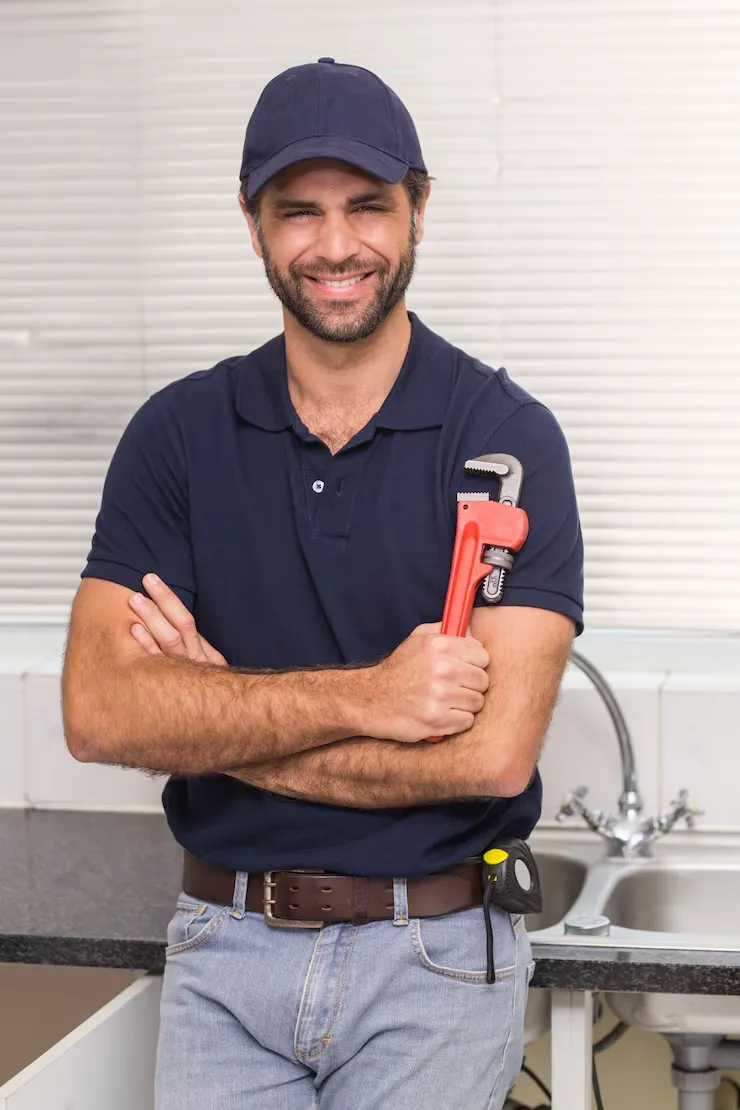
Sewage backups don’t wait for business hours. We offer 24/7 emergency drain service throughout Portland. If water is rising, here’s what to do while we’re on the way:
- Stop using water. No sinks, showers, toilets, dishwasher, or washing machine.
- Shut off the water supply to any overflowing fixture.
- Keep people and pets away from standing sewage.
- Don’t add chemicals. They complicate the repair and create a hazard.
- Take photos if there’s damage — useful for insurance.
Then call us. We’ll get a technician out and get flow restored.
How Long Does Drain Cleaning Take?
Most residential drain cleaning takes 30 minutes to 2 hours.
Here’s what actually drives the number:
Common Drain Issues in Portland Homes
Portland’s housing stock skews old. A lot of the city’s homes were built between 1900 and 1950, and their original drain systems are still in the ground.
Cast iron drain lines corrode from the inside out. The pipe wall roughens and scales, catching debris and narrowing flow. Eventually the bottom of the pipe rusts through entirely.
Clay sewer laterals have joints every few feet. Roots find those joints and grow in.
Galvanized pipe builds heavy mineral scale, particularly on branch drains and older supply lines.
Tree root intrusion is widespread in neighborhoods like Laurelhurst, Irvington, Eastmoreland, and Sellwood, where mature street trees sit right over sewer laterals.
Heavy winter rainfall raises groundwater and pushes silt into cracked pipes. Basement floor drains and area drains back up most often between November and March.
Basements and crawl spaces turn a small drain leak into a moisture and mold problem quickly.
Areas We Serve in Portland
We provide drain cleaning throughout the Portland metro area, on both sides of the Willamette. Whether you’re in a century-old Craftsman with a clay lateral or a newer building downtown, we’re familiar with the plumbing in your neighborhood.
Our service areas include the Pearl District, Downtown Portland, Northwest Portland, Northeast Portland, Southeast Portland, and Southwest Portland, along with St. Johns, Sellwood-Moreland, Laurelhurst, the Hollywood District, Irvington, the Alberta Arts District, Hawthorne, Montavilla, Goose Hollow, Hillsdale, Multnomah Village, Eastmoreland, Beaumont-Wilshire, and Arbor Lodge.
Don’t see your neighborhood? Give us a call — we likely cover it.
Frequently Asked Questions