
Kitchen Drain Cleaning in Portland, OR
Is your kitchen sink draining slowly, holding water, or backing up while you cook? We provides kitchen drain cleaning in Portland, Oregon for homeowners, landlords, and business owners. We clear grease buildup, food waste, soap scum, and other blockages that stop a kitchen sink from draining properly.
Kitchen Drain Clogged? Here’s What You Should Do
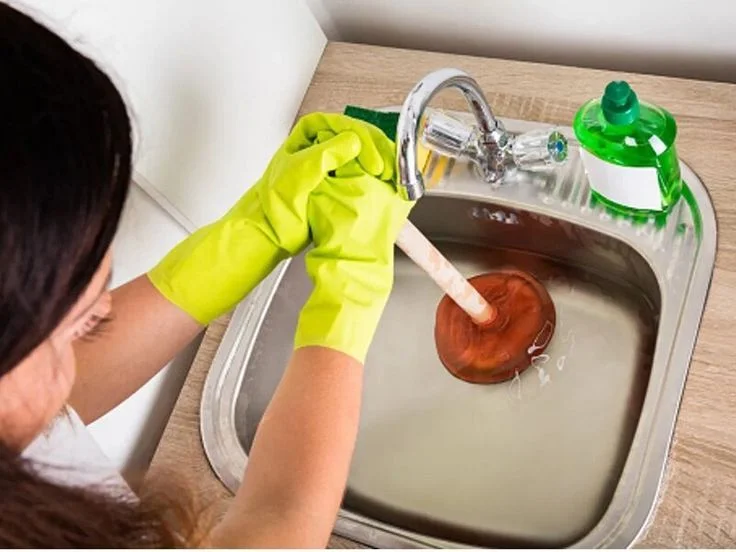
If your kitchen drain is clogged, stop running water down the sink, remove any standing water, and avoid pouring chemical drain cleaner into the pipe. Try a plunger or clean the P-trap under the sink. If the drain is still slow or blocked after that, call a plumber.
Here’s how to read what your sink is telling you:
If water is backing up into more than one fixture, or wastewater is coming up anywhere in the house, treat it as urgent and call for emergency plumbing service.
Common Signs You Need Kitchen Drain Cleaning
Most drain emergencies give you warning first. Here’s what to watch for:
Your Kitchen Sink Is Draining Slowly
A slow kitchen drain is the earliest warning sign. Water still goes down, but it lingers around the strainer. This almost always means grease and food residue have coated the inside of the pipe and narrowed the opening.
This is the cheapest and easiest stage to fix. Waiting usually means the pipe closes up further until nothing moves at all.
Water Is Standing in the Sink
Standing water means the blockage now covers most of the pipe. A plunger sometimes helps at this stage. If the water drops slowly and then stops again the next day, the buildup is still there and needs to be removed properly.
Your Drain Smells Bad
A sour or rotten smell usually comes from food waste and grease stuck to the pipe walls or sitting in the P-trap. Rinsing with hot water masks it for a day or two, but the smell returns because the source is still in the pipe. A dry P-trap can also let sewer gas in — that smells more like sulfur, and is worth mentioning when you call.
The Drain Makes Gurgling Sounds
Gurgling means air is being forced past a blockage or through a restricted vent. You’ll often hear it right after the water finishes draining, or when the dishwasher empties. The line isn’t flowing freely, even if water still goes down.
Water Backs Up Into the Sink
If water rises in one basin when you run the disposal in the other, the clog is below the point where the two drains join. This is past the reach of most household tools and typically needs a drain auger.
The Kitchen Drain Keeps Clogging
This is the most important sign to pay attention to. If the same sink clogs every few weeks or months, something is causing it — heavy grease buildup deeper in the line, a poorly sloped pipe, a damaged section of pipe, or an issue further toward the sewer line. Clearing it again and again treats the symptom. An inspection finds the cause.
What Causes Kitchen Sink Drains to Clog?
Grease and Cooking Oil
Grease is the number one cause of kitchen drain clogs. Cooking oil, bacon fat, butter, and grease rinsed off pans go down as a warm liquid, then cool and harden inside the pipe. Each time it happens, the coating gets thicker.
Food Scraps and Organic Waste
Coffee grounds, rice, pasta, eggshells, potato peels, and fibrous vegetable scraps are common culprits. Starchy foods swell with water, and fibrous scraps wrap around disposal blades and pipe bends.
A garbage disposal grinds food, but it doesn’t stop that food from collecting in the drain line — especially when it mixes with grease. If the disposal itself is jamming or humming, that’s a separate issue, and we also offer garbage disposal repair.
Soap and Mineral Buildup
Dish soap and detergent residue combine with hard water minerals to form a film on the pipe wall. On its own it’s slow to cause trouble. Combined with grease, it forms a harder deposit that resists simple plunging.
Other Plumbing Services
How We Unclog Kitchen Sink Drains
Drain Snaking and Mechanical Cleaning
A drain snake — also called a plumbing snake or drain auger — is the standard tool for most kitchen sink clogs. A flexible cable is fed into the line to break apart or pull back the blockage.
It works well for food waste, soft clogs, and most everyday blockages, and it’s usually our first choice because it’s effective without being hard on your pipes.
Hydro Jetting for Tough Buildup
Hydro jetting uses high-pressure water to scour the inside walls of the drain pipe. Where a snake punches a hole through a clog, jetting strips the buildup off the pipe wall.
This is the right choice for heavy grease buildup, recurring clogs, and most commercial kitchen drain lines.
P-Trap Cleaning
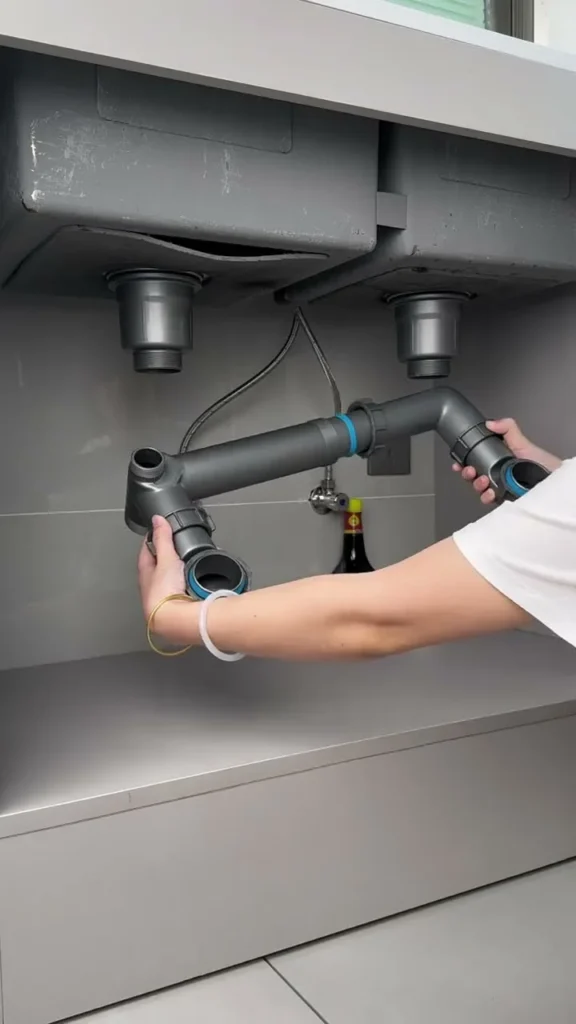
The P-trap is the curved section of pipe under your sink. It holds water to block sewer gas, and because it’s the first bend the water hits, it catches a lot — grease, food, and dropped objects all collect there.
Removing and cleaning it is straightforward and resolves a good number of kitchen sink clogs on its own.
Drain Camera Inspection
A drain camera goes into the pipe so we can see its interior condition — buildup, a cracked section, a sag, or roots intruding further down.
Most single kitchen clogs don’t need one. We recommend it when a drain keeps clogging without an obvious cause, when we suspect pipe damage, or when the problem may extend into the sewer line.
Our Kitchen Drain Cleaning Process
Step 1: Inspect the Kitchen Drain
We look at the sink, the drain assembly, the P-trap, and the disposal if there is one. We also ask what you’ve noticed — how long it’s been slow, whether it’s happened before, whether other drains are affected. That history often points straight to the problem.
Step 2: Identify the Type and Location of the Clog
Where the clog sits changes how we treat it. A blockage in the P-trap is a different job than one 20 feet down the line. We check whether other fixtures drain normally, since that separates a local kitchen clog from a problem in a shared drain or the main line.
Step 3: Choose the Right Drain Cleaning Method
Not every clog needs the same tool. A trapped object needs the P-trap opened. A soft food clog usually clears with a drain snake. Years of hardened grease may call for hydro jetting. We explain what we recommend, and why, before starting.
Step 4: Remove the Blockage
We clear the blockage using the method that fits, protecting your pipes and cabinet space as we work. Older or fragile pipes get a gentler approach.
Step 5: Test the Drain Flow
Once the clog is out, we run water to confirm the drain is flowing freely — not just moving again briefly. We also check for leaks at any connection we opened.
Why Choose Us for Kitchen Drain Cleaning?
local Portland plumbing company
We work throughout Portland and the surrounding metro area, on both residential and commercial properties.
We diagnose before we clear
Knowing where the clog is and what caused it means the right method gets used the first time — and it’s how a recurring problem gets solved instead of repeated.
We explain things clearly
You’ll know what we found, what we’re doing about it, and what to expect afterward, in plain language.
We handle homes and businesses
Single-family homes, rentals, multi-unit properties, restaurants, and commercial kitchens.
Areas We Serve in Portland
We provide kitchen drain cleaning throughout Portland and the surrounding metro area, including:
Portland neighborhoods: Pearl District, Hawthorne, Irvington, St. Johns, Sellwood, Sellwood-Moreland, Hillsdale, Concordia, Lents, Downtown Portland, Alberta Arts District, Richmond, Northwest District, Beaumont-Wilshire, Hollywood District, Multnomah Village, Laurelhurst, and Foster-Powell.
Surrounding communities: Beaverton, Gresham, Lake Oswego, Clackamas, Milwaukie, and Tigard.
Not sure whether we reach you? Give us a call and we’ll let you know.
Frequently Asked Questions About Kitchen Drain Cleaning